


DDR6 Release Date: Is Next-Gen Ram Coming Out in 2026?
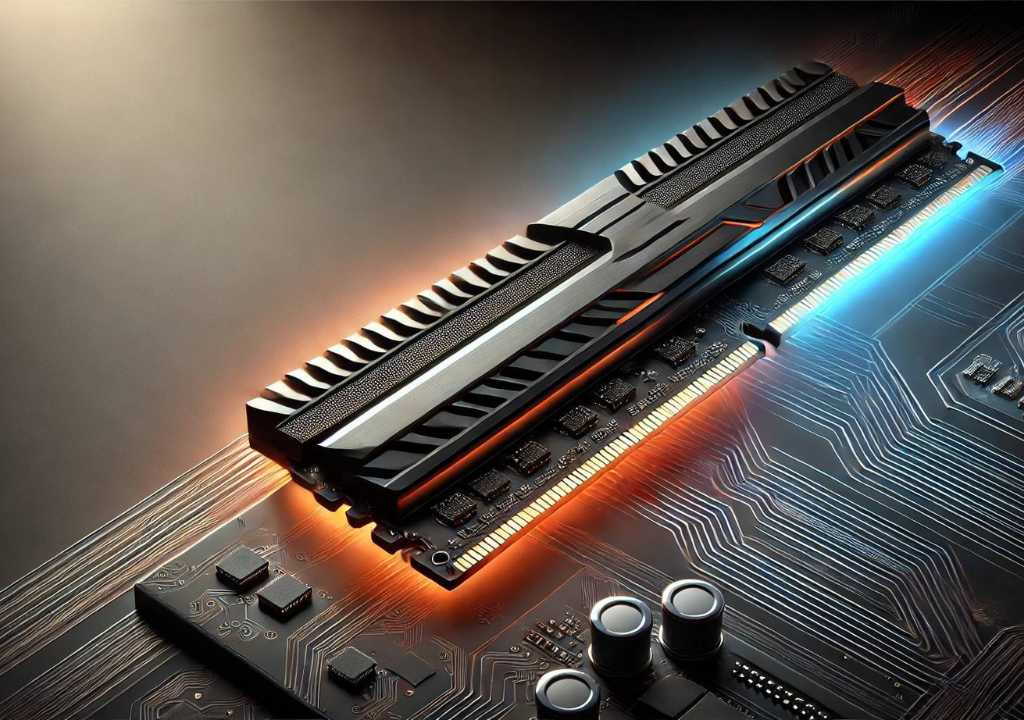
While DDR5 continues to gain traction in the consumer and commercial industries, the next generation of memory technology is already emerging. DDR6 RAM is expected to quadruple the performance of DDR5 that providing unparalleled speeds and bandwidth to enable AI workloads, high-performance computing, and next-generation gaming platforms.
Leading memory manufacturers, including Samsung, SK Hynix, and Micron Technology, are currently in the validation stage. They are collaborating with Intel, AMD, and NVIDIA on platform development. The semiconductor standardization authority, JEDEC, has already published the LPDDR6 classification for mobile devices and expects to finalize desktop DDR6 specifications shortly.
However, the timescale for consumer availability has changed from previous estimates. This guide tells you all you need to know about DDR6’s release date, specifications and if you should wait or buy DDR5 now.
DDR6 Release Timeline: When is It Coming?
The DDR6 rollout will take place in stages across several market segments. It begins with mobile devices and progressing to enterprise servers and consumer desktops.
Complete Release Schedule
DDR6’s availability varies greatly between market groups. Understanding the phased rollout helps you set realistic expectations for when you can buy DDR6 memory modules. Check this table for the scheduled release dates:
| Market Segment | Timeline | Status |
| LPDDR6 Standard | July 2025 | Published by JEDEC |
| Mobile Devices (LPDDR6) | Late 2025 – Early 2026 | In Production |
| DDR6 Desktop Standard | Q2-Q4 2025 | Final Specifications Expected |
| Server/Enterprise DDR6 | 2026-2027 | Platform Validation Phase |
| Consumer Desktop DDR6 | 2027 | Development Phase |
Key Takeaway: Consumer DDR6 modules will not be available until 2027, not late 2025 as previously expected. In 2026, the server and enterprise industries will have priority access.
Why the Delay?
There are several reasons why the timeline is longer. To run at speeds higher than 17,600 MT/s, you need to solve new problems with signal integrity. The industry also requires time to get processor manufactures, motherboard manufacturers, and BIOS developers to work together. Furthermore, the lessons acquired from the unstable prices of DDR5’s launch have led to a more careful rollout to make sure prices and availability stay consistent.
LPDDR6: The First DDR6 Standard
On July 9, 2025, JEDEC released JESD209-6, the official Low Power Double Data Rate 6 (LPDDR6) standard and the first DDR6-generation specification. This milestone offers a glimpse of what desktop DDR6 will bring.
LPDDR6 Key Specifications
The LPDDR6 standard incorporates significant technical enhancements over its predecessor. The following are the essential standards that define the first DDR6-generation memory for mobile applications:
| Specification | Details |
| Speed Range | 10,667 to 14,400 MT/s |
| Architecture | Dual sub-channel, 12 data signals per sub-channel |
| Target Devices | Smartphones, tablets, AI edge devices |
| Key Features | Programmable link protection, enhanced on-die ECC |
| Industry Support | Qualcomm, MediaTek, Samsung, Micron, SK Hynix |
Samsung has revealed plans to deliver LPDDR6 chips for Qualcomm’s upcoming Snapdragon 8 Elite Gen 2 mobile platform in late 2025, making it the fastest commercial deployment of any DDR standard to date.
DDR6 Specifications and Performance
DDR6 has roughly double the performance of DDR5, with benefits going far beyond raw speed. The architecture has been completely modified to overcome bottlenecks in the current generation.
1. Speed and Bandwidth
DDR6 has an initial throughput of 8,800 MT/s, with plans to increase to 17,600 MT/s. Enthusiastic overclockers may eventually push modules above 21,000 MT/s.
Bandwidth Evolution
Memory bandwidth has continuously doubled with each DDR generation, allowing processors to access data more quickly. This path demonstrates how DDR6 follows the industry’s predictable performance scaling trend.
| DDR Generation | Launch Year | Base Speed | Memory Bandwidth |
| DDR4 | 2014 | 2,133 MT/s | 28.8 GB/s |
| DDR5 | 2020 | 4,800 MT/s | 67.2 GB/s |
| DDR6 | 2025 | 8,800 MT/s | 134.4 GB/s |
This continuous doubling of bandwidth with each generation allows computing speed to keep up with processor developments while preventing memory from becoming a system bottleneck.
2. Architectural Innovations
- Memory Channels: DDR6 features a 4×24-bit sub-channel structure, unlike DDR5’s 2×32-bit design. This enables multiple sections of the CPU to access memory concurrently without contention, which is critical for modern processors with dozens of cores.
- CAMM2 Form Factor: Traditional DIMM form factors have physical restrictions at DDR6 speeds. The industry is transitioning to CAMM2 (Compression Attached Memory Module 2), which provides enhanced signal integrity through shorter traces and improved thermal management. CAMM2 will initially focus on servers and high-end notebooks.
- Power Efficiency: DDR6 will run at a lower voltage than DDR5’s 1.1V and contains Dynamic Voltage and Frequency Scaling (DVFS), which enables the memory controller to dynamically alter voltage and speed based on workload needs.
3. Memory Architecture Comparison
DDR6’s design innovations go beyond speed increases. The fundamental design variations in sub-channels, banks, and burst length show how memory technology evolves to accommodate modern computing demands.
| Feature | DDR4 | DDR5 | DDR6 |
| Sub-Channels | 1×64-bit | 2×32-bit | 4×24-bit |
| Memory Banks | 16 | 32 | 64 |
| Burst Length | 8 | 16 | 32 |
| Max Capacity per DIMM | 64 GB | 128 GB | 256 GB |
DDR5 vs DDR6: Key Differences
Understanding the differences between DDR5 vs DDR6 is critical for anyone considering an upgrade or a new build. Let’s find out the key differences between the DDR5 and DDR6 generations.
1. Technical Comparison
The technical differences between DDR5 vs DDR6 will help you make informed upgrade decisions. While both technologies have similar foundations, DDR6 provides significant improvements in speed, bandwidth, capacity, and power efficiency. The comparison below highlights the measurable performance gains and architectural changes that distinguish these two memory generations.
| Feature | DDR5 | DDR6 | Improvement |
| Base Speed | 4,800 MT/s | 8,800 MT/s | 83% faster |
| JEDEC Max Speed | 6,400 MT/s | 12,800 MT/s | 100% faster |
| OC Potential | 10,000+ MT/s | 21,000+ MT/s | 110% faster |
| Voltage | 1.1V | <1.1V | Lower power |
| Channels per DIMM | 2×32-bit | 4×24-bit | Better parallelism |
| Burst Length | 16 | 32 | 100% more data |
| Bandwidth per Module | ~67 GB/s | 134+ GB/s | 100% increase |
| Max Capacity | 128 GB | 256 GB | 100% more |
| Error Correction | On-die ECC | On-die + off-die | Enhanced reliability |
| Consumer Availability | Available Now | 2027+ | — |
| Platform Support | Intel 12th-15th Gen AMD Ryzen 7000 /9000 | Future platforms | Requires a new CPU/mobo |
2. Performance By Workload
Not every application benefits equally from DDR6’s increased bandwidth. While some workloads see dramatic performance gains, other system components continue to bottleneck them. Understanding how DDR6 impacts your specific use case helps determine whether the upgrade cost justifies the performance gains you’ll experience in real-world scenarios.
| Workload Type | DDR6 Expected Benefit |
| Gaming | Minimal (5-10% in CPU-bound scenarios) |
| Content Creation | 15-30% faster rendering |
| AI/ML Training | 40-60% faster training times |
| Video Editing | 20-35% timeline improvements |
| Scientific Computing | 50-100% faster data processing |
Should You Wait for DDR6?
This is the most practical question for anyone planning a purchase. The answer depends on your timeline, budget, and use case.
Buy DDR5 Now If:
- You need a system in 2025-2026.
- You are building a gaming PC (the GPU remains the bottleneck).
- Budget is a primary concern.
- You want proven, mature technology.
- You upgrade your systems every 3 – 4 years.
Wait for DDR6 If:
- You can delay your build until 2027 or later.
- You work with AI/ML workloads professionally.
- You are building a long-term workstation (5+ years lifespan).
- Budget allows for early adopter pricing (expect 3-4x DDR5 costs initially).
- You need maximum memory bandwidth for scientific computing.
Platform Requirements
DDR6 will require completely new platforms, check out this table to understand requirements better.
| Component | Requirement |
| Processor | New CPU with DDR6 memory controller |
| Motherboard | DDR6-compatible chipset and slots |
| BIOS/UEFI | Updated firmware |
| Existing DDR5/DDR4 | Not compatible – no backward compatibility |
Final Thoughts
DDR6 is the next major evolution in computer memory, promising to double DDR5 performance while consuming less power. All leading manufacturers have completed prototype designs and are collaborating with processor manufacturers on platform validation, with LPDDR6 already published as an official standard in July 2025.
However, consumer availability exceeds initial expectations. Desktop DDR6 won’t reach mainstream users until 2027, with enterprise and server markets receiving priority in 2026. Initial pricing will most likely be 3-4 times the equivalent DDR5 capacity, with prices falling as production ramps up.
DDR5 remains the best option for most users building systems in 2025-2026. The technology is developed, pricing is competitive, and performance is excellent for current applications. DDR5 will continue to serve mainstream users well for years, even after DDR6 is released.
Early adopters, AI professionals, and those building systems with 5-year or longer lifespans should keep an eye on DDR6 developments through 2026. As new platforms are introduced and prices stabilize in 2027-2028, DDR6 will become more appealing for heavy tasks that fully utilize its increased bandwidth and improved features.
To receive swift and dependable assistance for all your computer parts requirements, get in touch with our specialized team by calling us at (855) 483-7810 or contact us for bulk orders.
Frequently Asked Questions
Does DDR6 Memory Exist?
Yes, DDR6 is in active development. JEDEC published the LPDDR6 standard in July 2025, and desktop DDR6 specifications are expected to be finalized by late 2025.
Is DDR6 RAM Released?
LPDDR6 for mobile devices will see its first products in late 2025 or early 2026. Desktop DDR6 RAM will launch for enterprise markets in 2026–2027, with consumer availability in 2027.
How Fast is DDR6?
DDR6 starts at 8,800 MT/s and goes up to 17,600 MT/s, with overclocked speeds potentially exceeding 21,000 MT/s. This roughly doubles DDR5’s performance.
Will DDR6 Work with My Current Motherboard?
No, DDR6 requires new motherboards and CPUs with DDR6 memory controllers; it is not backward compatible with DDR5 or DDR4 systems.
What’s the Difference Between DDR6 and GDDR6?
GDDR6 is a type of graphics memory for GPUs introduced in 2018. DDR6 is system memory for CPUs, and it will be available in 2026-2027. They are distinct technologies, each with its own set of advantages.
- How Much Will DDR6 Cost?
Initial modules in 2026-2027 will likely cost 3-4x the equivalent DDR5 capacity, declining to price parity by 2029-2030 as production scales.
Categories


tags

Expert team support
We accept POs from fortune 1000 companies, government agencies, defense, schools and hospitals.
Do you need advice on buying or selling hardware? Fill out the form and we will return.

Sales & Support
(855) 483-7810
We respond within 48 hours on all weekdays
Opening hours
Monday to thursday: 08.30-16.30
Friday: 08.30-15.30



