


Choosing the Right Fibre Channel Controller for Your Business
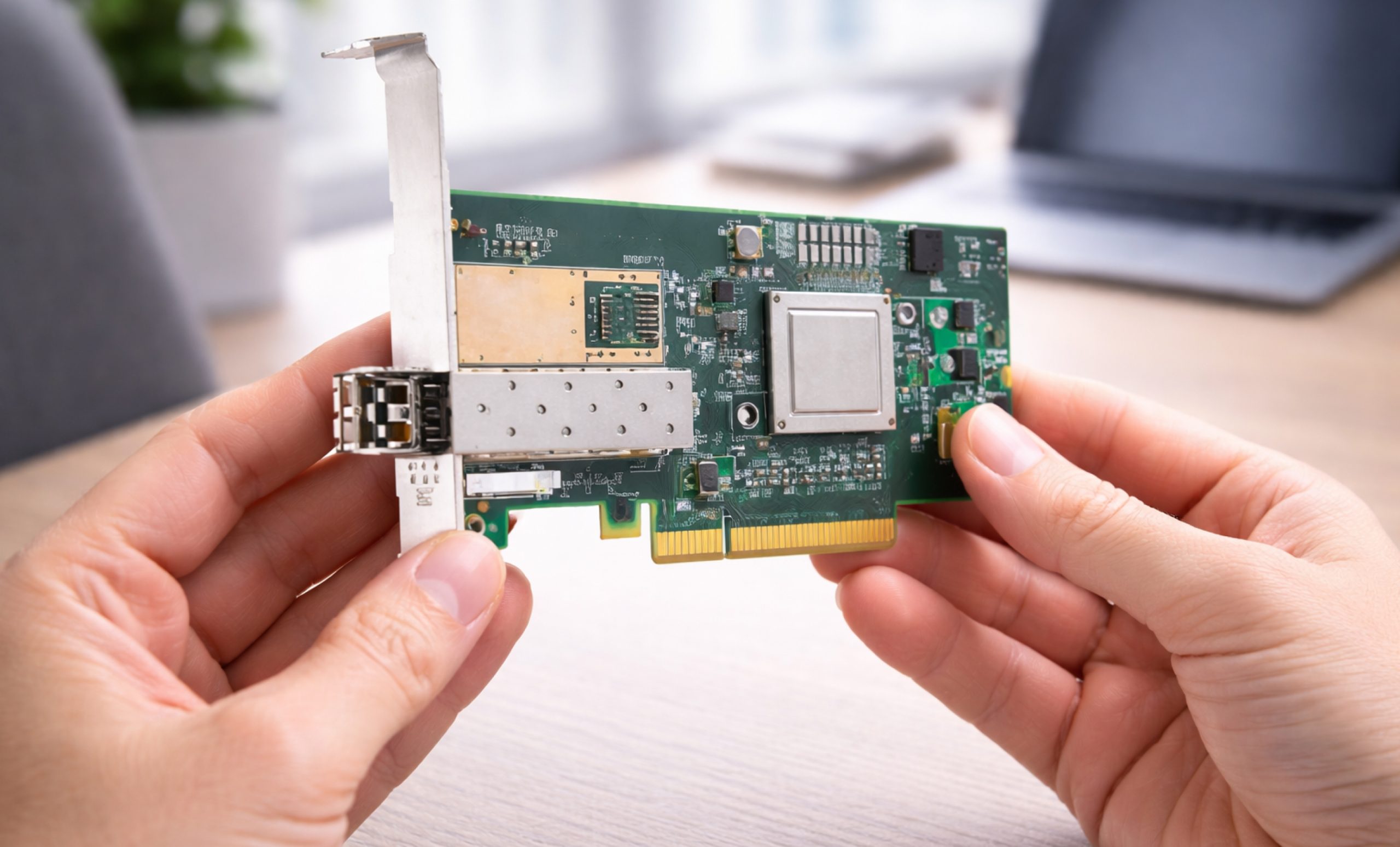
In the high-stakes world of enterprise data, speed and dependability are more than just preferences; they are critical to business continuity. As we approach 2026, the sheer volume of data generated by AI-driven analytics and autonomous systems places enormous strain on storage area networks (SANs). At the heart of these networks is a vital piece of hardware: the fibre controller.
Choosing the right controller is no longer as simple as selecting the fastest card. It necessitates a thorough grasp of data movement, protection, and infrastructure scaling. Whether you’re upgrading an existing SAN or creating a new data center from the ground up, choosing the best fibre channel controller guarantees that your mission-critical applications never experience bottlenecks.
What is a Fibre Channel Controller?
A Fibre Channel (FC) controller is a high-speed interface that connects servers and storage devices. In most enterprise environments, this takes the form of a Host Bus Adapter (HBA). For increasingly complicated storage arrays, a Fibre Channel RAID controller manages numerous disks while providing high-speed communication and data redundancy.
By 2026, these controllers had progressed greatly. Modern devices now support 64GFC and even 128GFC standards, and they have Silicon Root of Trust protection to protect against firmware-level cyberattacks. When you buy Fibre Channel Controller technology today, you’re buying a sophisticated processor dedicated to storage efficiency.
The Science of Fibre Channel Flow Control
The primary advantage of Fibre Channel over other networking protocols is its “lossless” nature. This is accomplished via a process known as fibre channel flow regulation. Fibre Channel, unlike Ethernet, ensures that every frame is delivered.
Buffer-to-Buffer Credits (BB_Credits)
At the core of fibre channel flow control are buffer-to-buffer credits. Here is how it works:
- Credit Handshake: When two ports connect, they exchange the number of frames they can store in their respective buffers.
- Transmission: The sender transmits a frame and decrements its credit count.
- Acknowledgment: Once the receiver processes the frame and clears a buffer, it sends an R_RDY (Receiver Ready) signal back.
- Replenishment: The sender receives the signal and increments its credit count.
If the credits reach zero, the sender will stop immediately. This prevents “buffer overflow” and guarantees no data loss, making the fibre controller the most dependable option for database and financial activities.
Fibre Channel RAID Controller vs. Standard HBA
When building your storage system, you must choose between a standard HBA cards and a dedicated Fibre Channel RAID controller.
- Standard HBA: HBA cards work as a simple bridge between the server and the SAN. It handles the protocol conversion but leaves data management to the server or the storage array.
- Fibre Channel RAID Controller: These are typically found inside the storage array itself (like the HPE MSA series or QSAN X Cube FAS). They manage the physical disks, calculating parity (RAID 5/6) and managing failover between dual-active controllers.
If your firm demands “six-nines” (99.9999%) availability, investing in a high-end Fibre Channel RAID controller is a must. These devices provide sub-millisecond latency and can handle millions of IOPS (Input/Output Operations Per Second), which is critical for the AI inference workloads that will dominate the scene in 2026.
Key Factors: Choosing the Best Fibre Channel Controller
To find the best Fibre Channel Controller for your specific needs, evaluate these three pillars:
1. Throughput and Generation
- Gen 6 (32GFC): Still widely used and highly cost-effective for medium enterprises.
- Gen 7 (64GFC): The current gold standard. It offers double the throughput of Gen 6 and is essential for All-Flash Arrays (AFAs).
- Gen 8 (128GFC): Emerging in 2026 for high-end core directors and massive data centers.
2. Port Density and PCIe Interface
Make sure the fibre controller matches your server’s bus speed. A 64GFC dual-port card requires at least a PCIe 4.0 or 5.0 slot to avoid the bus becoming a bottleneck.
3. Congestion Mitigation
Advanced controllers from brands such as Marvell (QLogic) and Broadcom (Brocade) now support autonomous SAN congestion reduction. This software-defined function, in conjunction with fibre channel flow control, automatically identifies slow-drain devices and reroutes traffic.
Pricing Guide: Fibre Channel Controller Price in 2026
The fiber channel controller prices might vary greatly depending on port quantity and speed. As of 2026, market trends indicate that prices for 32GFC hardware have stabilized slightly, while 64GFC remains expensive.
| Controller Type | Estimated Price (2026) | Best For |
| Single Port 16GFC HBA | $400 – $600 | Legacy systems, SMB backups |
| Dual Port 32GFC HBA | $1,200 – $1,800 | General enterprise virtualization |
| Quad Port 64GFC HBA | $3,500 – $5,000 | AI Workloads, NVMe-oF |
| Fibre Channel RAID Controller | $8,000+ | Storage Arrays (Dual-Active) |
Note: Prices are estimates and vary by vendor and support contracts.
Strategic Advice: Where to Buy Fibre Channel Controller Hardware
When you’re ready to buy Fibre Channel Controller equipment, avoid the temptation of untrustworthy third-party marketplaces. Buying from approved resellers is essential because FC hardware is heavily reliant on firmware compatibility, especially in Brocade or Cisco Systems.
Checklist before you buy:
- Compatibility: Check the server’s HCL (Hardware Compatibility List).
- SFP+ Modules: Ensure the controller includes the necessary optical transceivers.
- Warranty: Choose storage hardware from reliable and trusted platforms such as Direct macro. They offer 30 days refund and returned policy with more then 1 year warranty on hardware products.
Fibre Channel vs. Ethernet: The 2026 Verdict
Despite the advancements of Ethernet with 100GbE and 400GbE, Fibre Channel continues to dominate block storage. Ethernet is a “best-effort” network; even with iSCSI or NVMe/TCP, it might experience latency spikes.
The Best Fibre Channel Controller offers a dedicated, “silent” fabric that ensures storage traffic never conflicts with workplace YouTube streaming or Zoom talks. For companies where a 5-minute outage costs thousands of dollars, the predictable performance of a fiber controller is worth the investment.
Summary Comparison Table
Check out this comparison table of fibre Channel vs. Ethernet.
| Feature | Fibre Channel (FC) | iSCSI (Ethernet) |
| Reliability | Lossless via fibre channel flow control | Can drop packets (TCP recovery) |
| Latency | Consistently < 1ms | Variable (congestion dependent) |
| Management | Dedicated SAN Fabric | Shared LAN/WAN |
| Complexity | High (Requires FC Specialist) | Lower (General IT Skillset) |
| Hardware | Fibre Channel RAID Controller / HBA | Standard NIC/rNIC |
Final Thoughts
Choosing the best connectivity for your business requires a combination of performance, dependability, and affordability. Understanding the physics of fibre channel flow control and choosing the suitable Fibre Channel RAID controller ensures that your data infrastructure is prepared to meet future needs.
Whether you choose the lowest fibre channel controller price or the ultimate Best Fibre Channel Controller on the market, the investment in a dedicated storage pays returns in terms of uptime and application speed.
If you need more information about fiber channel vs. ethernet storage solutions, please call us at (855)-483-7810 or fill out the contact us form for bulk orders inquires.
Frequently Asked Questions (FAQs)
Is Fibre Channel faster than Ethernet?
While Ethernet offers higher theoretical raw speeds (up to 400GbE), a fibre controller provides lower latency and consistent performance for storage. It is purpose-built for block-level data without overhead.
What is a Fibre Channel used for?
Fibre Channel is primarily used to create Storage Area Networks (SANs). It connects servers to a Fibre Channel RAID controller, allowing high-speed, reliable access to large-scale enterprise data storage.
Can I use my existing Fibre Channel Controller for NVMe/FC?
Most Gen 6 (32GFC) and Gen 7 (64GFC) controllers can support NVMe over Fibre Channel with the right firmware. This setup lowers latency and CPU use, so you get modern NVMe storage speeds on your current network.
Are SFP+ modules interchangeable between different controllers?
Physically, yes. But many vendors, such as Brocade or Cisco, use firmware that only works with their own modules. For best results, always match the SFP+ module’s speed and brand to your fibre controller’s requirements.
How does Silicon Root of Trust protect my data?
This security feature checks the controller’s firmware every time it starts up. If the firmware has been tampered with, the card will not start, which stops hackers from using your storage interface to get into the network.
Categories


tags

Expert team support
We accept POs from fortune 1000 companies, government agencies, defense, schools and hospitals.
Do you need advice on buying or selling hardware? Fill out the form and we will return.

Sales & Support
(855) 483-7810
We respond within 48 hours on all weekdays
Opening hours
Monday to thursday: 08.30-16.30
Friday: 08.30-15.30



