


OLED vs QLED: What is the Difference?

LED TVs (light emitting diodes) are a common choice for people seeking a quality television experience. However, for a more premium and immersive display, users often compare OLED vs QLED TV technologies. To get the best value for money, it is important to understand your viewing needs and choose the right display accordingly. In this guide, we explore what is OLED vs QLED and how both technologies differ.
Difference between Oled Vs Led
What is OLED?
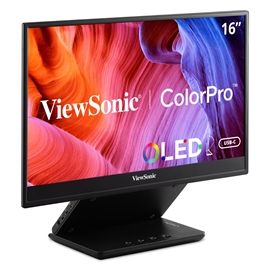
The OLED and QLED difference lies mainly in how each display technology produces light. OLED panels use self-emissive pixels that light up individually, while QLED TVs rely on LED backlighting combined with quantum dot technology. This fundamental difference impacts contrast, brightness, and overall viewing experience.
What is QLED TV?
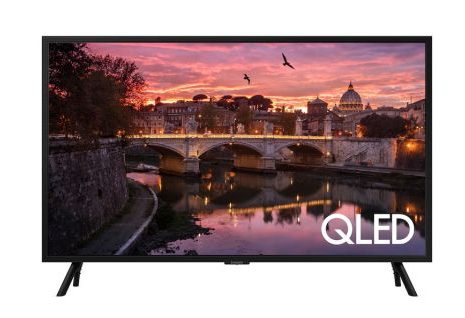
QLED TV uses quantum dot technology that provides an improved display compared to usual LED or OLED. Quantum dots are extremely small dots that can only be seen with a microscope. These dots emit light when exposed to the LED backlight, rendering clearer and more saturated colored pictures on the screen using a quantum dot filter, LED filter, and color filter. Besides that, in Samsung QLED, a quantum processor uses AI-based upscaling to further polish and refine the picture or video quality to 4k and 8k.
If you’re wondering what is QLED, it is a display technology that uses quantum dots placed in front of an LED backlight. These quantum dots enhance brightness and color accuracy, resulting in vivid and saturated visuals. QLED TVs are especially effective in bright rooms and are known for durability and long lifespan.
Difference between QLED vs OLED
The difference between QLED and OLED becomes noticeable in real-world usage. OLED focuses on perfect contrast and deep blacks, while QLED emphasizes high brightness and color consistency. Both offer excellent resolution, but their strengths suit different environments and preferences.
Picture Quality Comparison: Qled vs Oled
When comparing QLED TV vs OLED TV, picture quality depends on lighting conditions. OLED delivers infinite contrast and outstanding black levels, making it perfect for dark-room viewing. QLED TVs excel in brightness, making them ideal for well-lit spaces and daylight viewing.
QLED uses quantum dot technology to maintain the just right color contrast at the highest brightness level. While OLED offers better color accuracy in dark theme scenes, QLED does not maintain the right color to ensure a more vivid picture.
OLED vs QLED for Gaming
For gamers, OLED vs QLED for gaming is an important consideration. Both technologies offer low input lag and high refresh rates up to 120Hz with HDMI 2.1 support. OLED’s fast response time and superior dark-scene performance make it ideal for cinematic and story-driven games, while QLED’s brightness enhances colorful and fast-paced games.
Since OLED excels at dark room displays with amazing colors, it is better suited for games with darker themes, stealth, or horror genres. On the other hand, bright room displays are the forte of QLED, which ensures an excellent gaming experience in colorful games, for instance, sports.
High-end versions of OLED and QLED offer up to 120Hz Refresh rate and can be perfectly compatible with HDMI 2.1. This way, both OLED TVs and QLED can provide excellent gaming performance in high-pixelate games such as PS5, Xbox series X, etc.
Viewing Angles: Qled vs Oled
OLED displays maintain consistent picture quality from almost any angle, with minimal color fading. In contrast, QLED TVs may show reduced clarity when viewed from extreme side angles. This gives OLED an advantage for wide seating arrangements.
Motion Picture Response Time: Qled vs Oled
Motion response time affects how smoothly fast scenes appear. OLED panels typically have a much faster response time, reducing motion blur. QLED performs well for streaming and sports, but OLED offers smoother transitions for fast-action gaming and movies.
Where QLED can not go faster than one or two milliseconds, OLED maintains a response time of about 0.2 milliseconds and often less than that. Therefore, in terms of smoother screenplay, OLED performs better than QLED. If you are planning to use television for streaming, then QLED may be good, but if you are faster and more Fast-action gaming and sports, then OLED is a better choice.
Durability and Burn-in: Qled vs Oled
Burn-in is a concern often associated with OLED TVs, especially with prolonged static images. QLED TVs are less prone to burn-in, making them a safer choice for extended usage. This difference impacts long-term durability and usage patterns.
Value for Money: OLED vs QLED
When asking is OLED or QLED better, budget plays a major role. QLED TVs are generally more affordable and offer excellent brightness and longevity. OLED TVs are more expensive but justify their price with premium contrast and cinematic quality.
Conclusion
Comparison between OLED and QLED Both have their own strengths and weaknesses; this blog shares a detailed comparison of the features of both products. However, choosing the best television depends greatly on the required features, which may vary for each customer.
FAQ’s
Which is better oled or qled?
Both are good for different purposes, gameplays with darker theme, cinematic display, OLED is a better option. On the other hand, for bright theme streams QLED is the better option. However, QLED has longer lifespan. OLED has burn-in issues but provide excellent 4k and 8k Display Resolution.
What is qled vs oled?
Both are high pixel-led televisions. The major difference between both is how their pixel produces light. OLED uses organic light-emitting; therefore, it is called OLED, while QLED uses quantum dot technology, it is associated with the acronym QLED.
Is it worth paying more for a QLED TV?
Yes, definitely. Premium QLED TVs provide amazing picture quality and display screen resolution. You can get a bigger size of QLED, which may still be cheaper than OLED.
Categories


tags

Expert team support
We accept POs from fortune 1000 companies, government agencies, defense, schools and hospitals.
Do you need advice on buying or selling hardware? Fill out the form and we will return.

Sales & Support
(855) 483-7810
We respond within 48 hours on all weekdays
Opening hours
Monday to thursday: 08.30-16.30
Friday: 08.30-15.30



